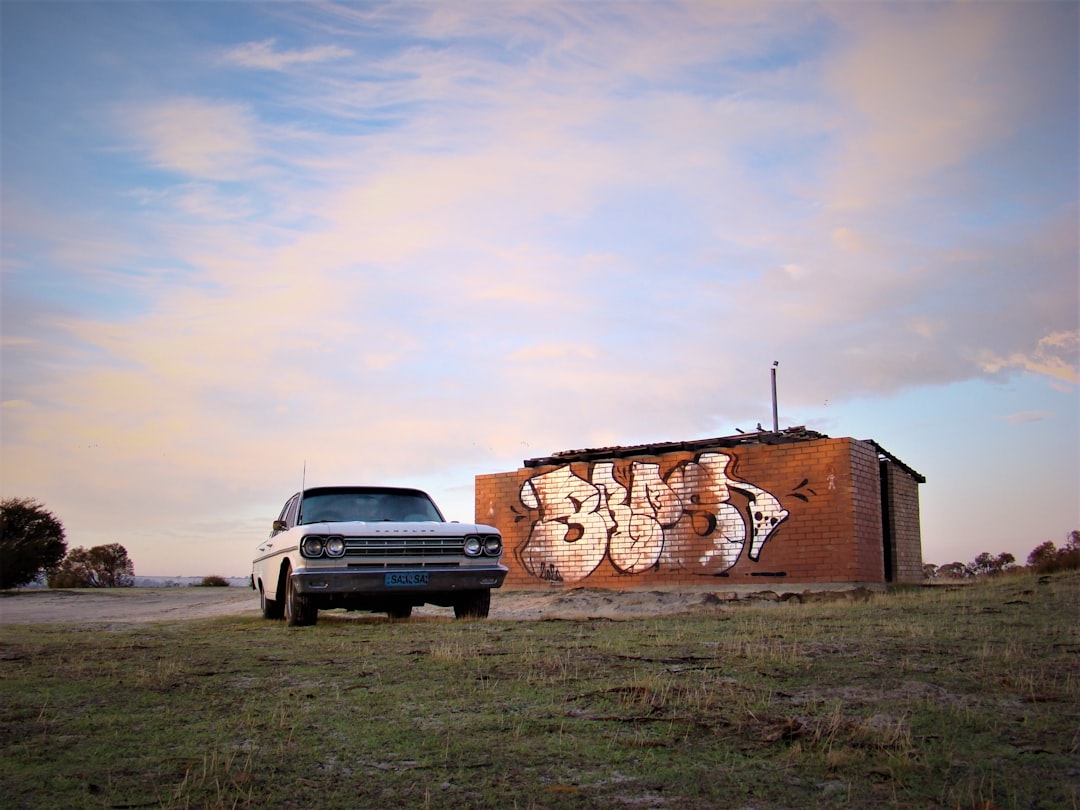
The Rise and Fall of Rambler: America's Forgotten Compact Car Empire
In an era dominated by the automotive giants of Detroit, one independent automaker dared to champion a different vision: the compact car. This is the compelling, and ultimately poignant, story of Rambler and the American Motors Corporation (AMC), a narrative that recently re-emerfaced, shedding new light on an often-overlooked chapter of American motoring history.
For a brief, shining period, Rambler wasn't just a challenger; it was a phenomenon. Before the Honda Civic or Toyota Corolla became household names, Rambler carved out a niche that propelled it to become the third-largest automaker in the United States, outselling even established players like Plymouth. Its origins trace back to the bicycle empire of Thomas B. Jeffery in the 1800s, laying the groundwork for what would become a significant force in early 20th-century transportation.
George Romney and the Compact Revolution
The zenith of Rambler's influence arrived under the astute leadership of George Romney. A man known for his conviction and a distinct contrast to the prevailing philosophy of 'bigger is better' in Detroit, Romney championed the cause of the well-made, honest, and value-driven compact car. He famously decried the opulent, gas-guzzling machines produced by the Big Three as 'gas-guzzling dinosaurs.' Under his guidance, Rambler proved that smaller, more efficient vehicles could not only compete but triumph in the American market. The company achieved record sales of over $1 billion by 1960 and became Wisconsin's largest private employer, deeply embedding itself within the economic and social fabric of its factory town, Kenosha. Generations of families in Kenosha built Ramblers, Nash cars, AMCs, and Jeeps, forging a legacy that was as much about community as it was about steel and engines.
A Tragic Decline and Lingering Legacy
However, Rambler's success was not destined to last. The seeds of its decline were sown in leadership mistakes and disastrous strategic shifts that saw the company abandon its core philosophy of differentiation. Instead of building upon its unique compact car appeal, AMC veered into an imitation strategy, attempting to compete directly with the larger manufacturers on their terms. This led to a series of questionable car experiments, including the infamously unconventional Gremlin and Pacer models.
By 1968, the Rambler name was quietly phased out in the American market, with the last Rambler American rolling off the Kenosha assembly line in June 1969. While the name disappeared, the company's tumultuous journey continued through a desperate bailout by Renault and a controversial takeover by Chrysler, ultimately leading to the closure of the Kenosha factory. The vibrant automotive hub that once hummed with ambition eventually fell silent, marking the end of a 67-year American story.
The recently brought-to-light story of Rambler serves as a powerful reminder of the volatile nature of the automotive industry and the critical importance of a clear vision. It highlights how a company, built on innovation and a commitment to a particular market need, can thrive, and conversely, how the abandonment of those principles can lead to a tragic collapse. Rambler's legacy, though often forgotten, remains a testament to the pioneers who dared to challenge the status quo and forever influenced the evolution of automotive engineering in America. The enduring lessons from Kenosha's compact car empire resonate even today, reminding us that true success often lies in staying true to one's foundational principles.