
Porsche Celebrates 50 Years of Transaxle Design, A Legacy of Balance and Innovation
Stuttgart, Germany — Automaker Porsche is marking a significant milestone in its illustrious history, celebrating the 50th anniversary of its pioneering transaxle architecture. Launched into series production in 1976, this innovative design redefined weight distribution and driving dynamics for a generation of Porsche sports cars, leaving an indelible mark on automotive engineering.
A Half-Century of Engineering Excellence
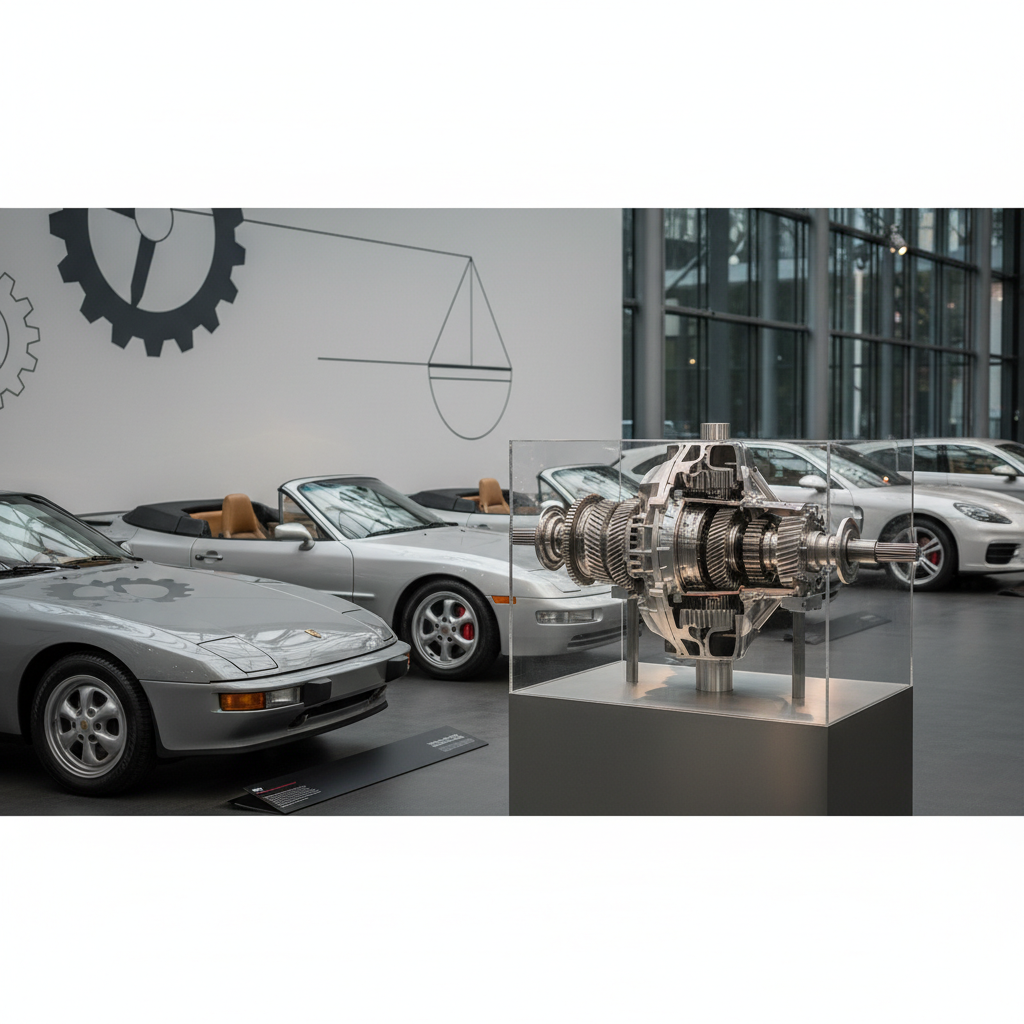
The transaxle concept, at its core, involves mounting the engine at the front of the vehicle and the gearbox at the rear, connected by a rigid tube enclosing the driveshaft. This configuration was strategically employed by Porsche to achieve an optimal 50:50 weight distribution, significantly enhancing handling, stability, and overall driving balance. This technical approach diverged from Porsche’s traditional rear-engine layout, showcasing the brand’s relentless pursuit of innovation and performance across diverse engineering philosophies.
Between 1976 and 1995, the transaxle architecture formed the backbone of four distinct Porsche model lines: the 924, 928, 944, and 968. These vehicles, collectively selling nearly 400,000 units, carved out a unique chapter in the company’s history. The 924, often seen as the entry point into the Porsche family during its era, offered accessible sports car performance. The luxurious 928, a grand tourer with a powerful V8 engine, brought a different dimension to the brand. The 944 became a commercial success, known for its balanced performance and refined handling, while the 968, the culmination of nearly two decades of continuous development, combined a potent 3.0-litre four-cylinder engine with advanced valve control systems, representing the pinnacle of the transaxle era.
'Forever Young': A Year-Long Homage
To commemorate this golden jubilee, Porsche Heritage and Museum has launched a special themed year titled 'Forever Young. Celebrating Transaxle.' This isn't a singular, static exhibition, but rather a dynamic series of rotating pop-up installations and events designed to offer fresh perspectives on the technology, design, and motorsport achievements that defined this era. The celebration consciously aims to capture the vibrant spirit of the 1980s, a decade where the transaxle concept reached its greatest convergence in technological advancement, stylistic expression, and public perception.
The opening presentation at the Porsche Museum in Zuffenhausen is currently on display until June 7, 2026, offering visitors an immersive look at the foundational transaxle models. Beyond the museum walls, the celebration extends to various selected locations, promising diverse narrative angles for enthusiasts worldwide. Special activity weekends, such as the 'Transaxle Meet – Spring Edition' on May 23 and 24, 2026, will feature curator talks providing deeper insights into the historical context and engineering marvels of the transaxle cars. Interactive elements, including a graffiti art photo spot in the logistics yard and quick-draw artists capturing the defining lines of transaxle models, are also part of the experience. Rare models like a 924 Carrera GT and a 924 GTP 'Le Mans' are expected to enrich the program on the museum forecourt, appealing to both seasoned collectors and new fans alike.
The Enduring Legacy
The transaxle era was a period of bold experimentation and significant evolution for Porsche. It demonstrated the brand’s willingness to explore diverse engineering paths, resulting in a range of sports cars that combined performance with exceptional drivability. The 944, for instance, proved incredibly popular due to its balanced character and defined design, effectively bridging the gap between entry-level models and more traditional sports car segments. This anniversary celebration not only honors a pivotal chapter in Porsche’s past but also underscores the enduring impact of its commitment to engineering excellence and innovation, principles that continue to drive the brand forward.