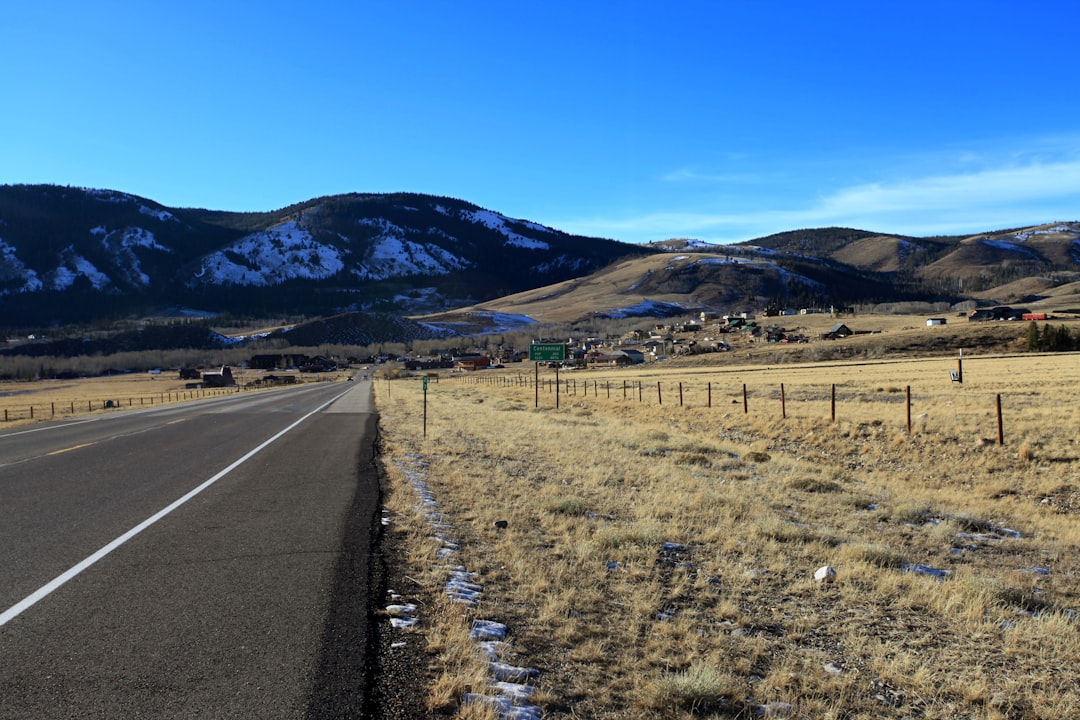
Route 66 Centennial: Tracing 100 Years of American Motoring History
As November approaches, America’s legendary Route 66 is gearing up to mark a monumental milestone: its 100th anniversary. This iconic thoroughfare, often dubbed 'The Main Street of America' or 'The Mother Road,' has transcended its function as a mere highway, becoming a powerful symbol of American culture, adventure, and the golden age of motoring. The centennial celebrations, already kicking off in various states, offer a unique opportunity to reflect on the highway’s profound impact on the nation’s automotive history and cultural identity.
Established in 1926, Route 66 was a vital artery in the country’s first numbered highway system. Spanning approximately 2,400 miles from Chicago, Illinois, to Santa Monica, California, it linked existing roads into a continuous corridor, fundamentally reshaping cross-country travel. Initially promoted as a direct and enjoyable route, its significance grew exponentially during the 1930s when it served as a crucial migration path for Dust Bowl families seeking new beginnings in the West. This period cemented its image as a road of hope and perseverance.
The Cultural Backbone of the American Road Trip
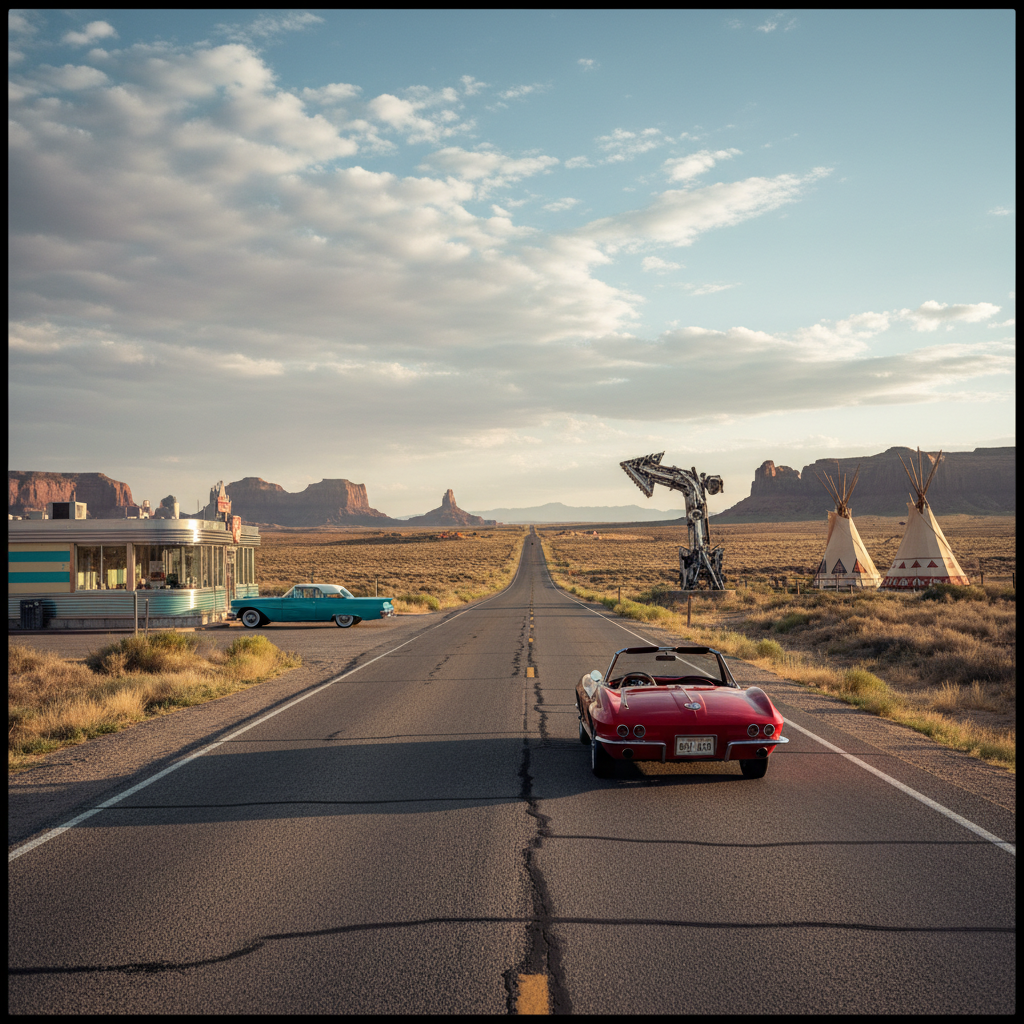
Following World War II, with increased car ownership and a burgeoning middle class, Route 66 truly came into its own, defining the quintessential American road trip. It became synonymous with freedom, exploration, and the romance of the open road. The highway fostered a vibrant roadside economy, giving rise to countless unique motels, diners, service stations, and quirky attractions. Unlike today's uniform corporate rest stops, each town along Route 66 offered its own distinct personality and charm, inviting travelers to experience a diverse tapestry of local cultures. Iconic landmarks like the Blue Swallow Motel in Tucumcari, New Mexico, and various neon-lit signs became inseparable from the Route 66 experience, preserving a nostalgic vision of mid-20th-century Americana.
The road was not just a means of transport; it was a character in literature, music, and film, immortalized in Bobby Troup's classic song '(Get Your Kicks on) Route 66' and John Steinbeck's novel 'The Grapes of Wrath.' These cultural touchstones further ingrained Route 66 into the global consciousness, making it a dream destination for automotive enthusiasts and history buffs worldwide.
Preserving a Legacy: Centennial Celebrations Underway
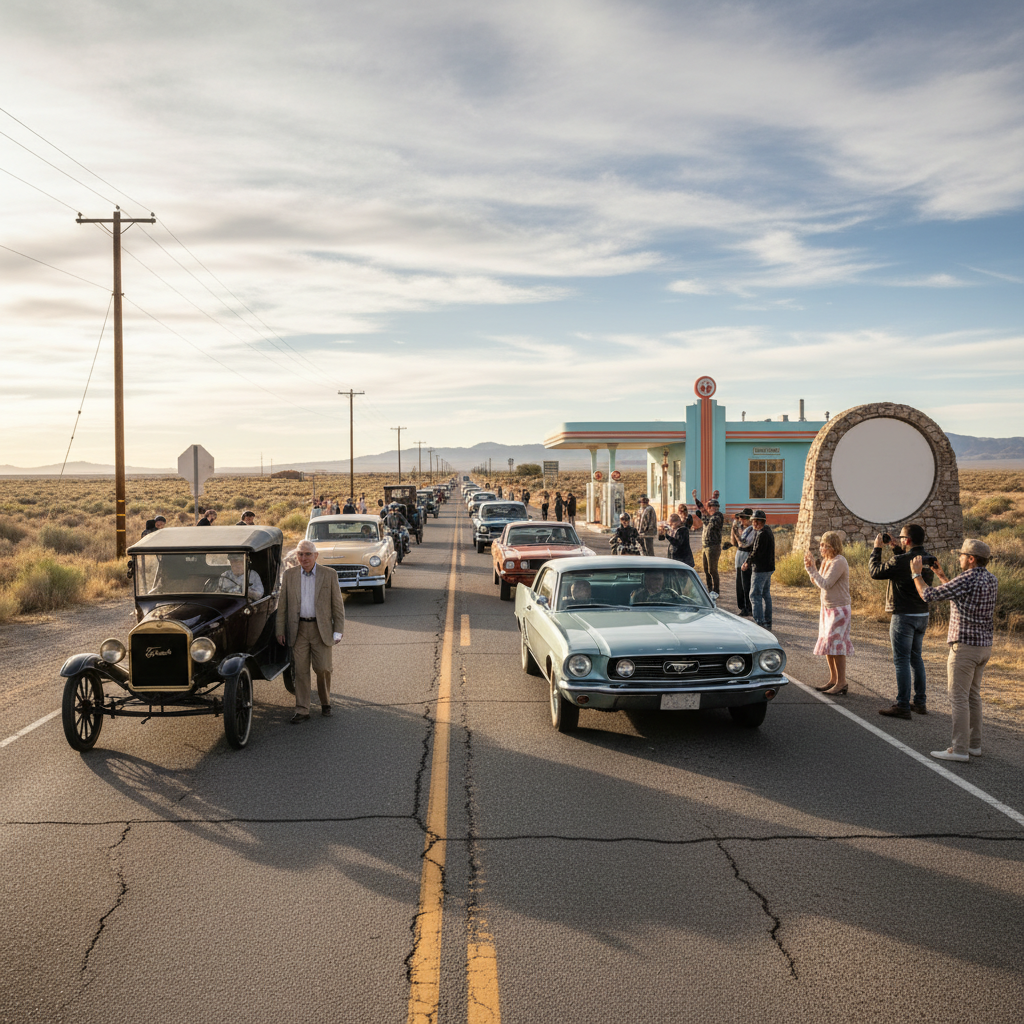
Despite its eventual decline in prominence with the advent of the Interstate Highway System in the latter half of the 20th century, Route 66 has experienced a remarkable resurgence as a historic route. Its surviving stretches, towns, and museums are dedicated to preserving the legacy of this iconic highway. The 100th anniversary in 2026 is being marked by a coordinated series of events across the eight states it traverses. Cities like Springfield, Missouri, often associated with the highway's origin, are serving as hubs for celebrations. Tulsa, Oklahoma, is hosting large-scale gatherings such as the Route 66 Road Fest, while communities in Arizona, including Flagstaff, Williams, Kingman, and Holbrook, are organizing local festivals, car shows, and historical reenactments throughout the year.
These centennial events are not just about looking back; they are about keeping the spirit of Route 66 alive for future generations. Vintage car journeys, like one recently embarked upon by America's Automotive Trust, highlight the authenticity of the route and encourage people to interact with its history firsthand. Enthusiasts are meticulously choosing iconic vehicles that symbolize the era, such as a 1969 Camaro SS, a '65 Country Squire station wagon, and a '52 Chevy five-window pickup, to traverse the historic path. This ongoing appreciation ensures that 'The Mother Road' remains a vibrant testament to America's automotive heritage, reminding us of a time when the journey itself was as significant as the destination.