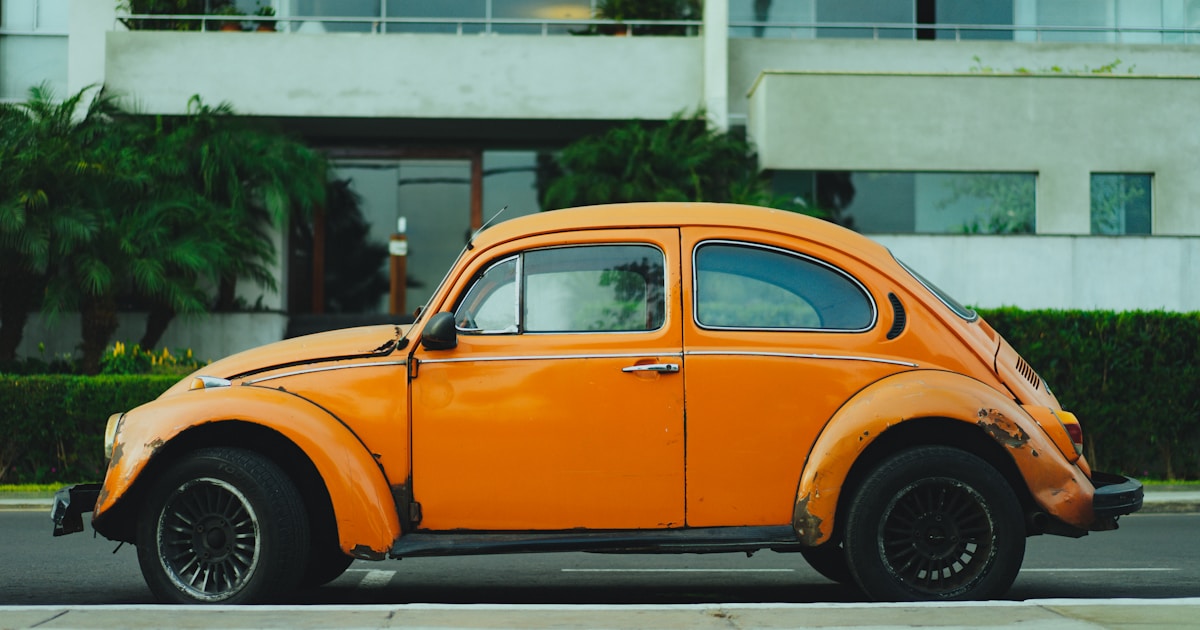
How the VW Beetle Became the People's Car — And Changed the World
No car in history has been produced in greater numbers, crossed more cultural boundaries, or meant more to more people than the Volkswagen Beetle. With over 21 million units built, the Beetle's story is the story of the 20th century itself.
Dark Origins
The Beetle's genesis is inseparable from one of history's darkest chapters. Commissioned by Adolf Hitler and designed by Ferdinand Porsche in the late 1930s, the KdF-Wagen (Kraft durch Freude — Strength through Joy) was intended as an affordable car for the German masses. A savings scheme was established, but no civilian cars were delivered before war production took priority.
Post-War Miracle
After the war, the bombed-out Wolfsburg factory was offered to — and rejected by — British, French, and American manufacturers, all of whom considered the Beetle's design hopelessly outdated. British officer Ivan Hirst, tasked with managing the factory, kept production running almost single-handedly, producing cars for the Allied occupation forces.
By 1955, the millionth Beetle had rolled off the line. By 1972, it surpassed the Ford Model T as the most-produced car in history.
Cultural Icon
The Beetle transcended transportation to become a cultural phenomenon. It was the car of choice for students, artists, surfers, and counterculture figures. Its friendly, anthropomorphic shape made it approachable in a way that no other car could match.
From Herbie the Love Bug to its starring role on the cover of Abbey Road, the Beetle embedded itself in popular culture with a tenacity that no marketing department could have engineered.