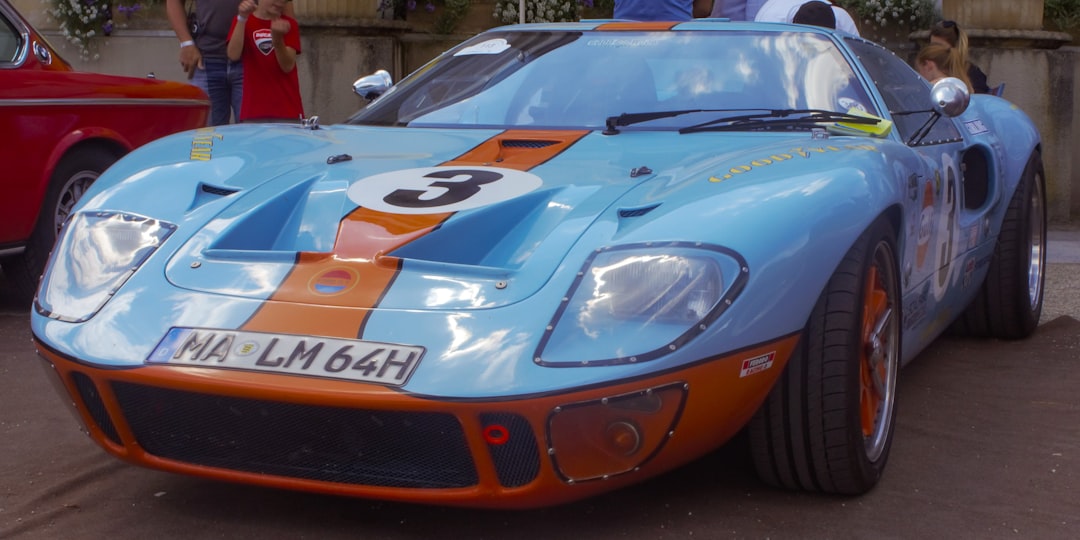
Le Mans Legend: A Deep Dive into the Historic Ford GT40 Mk I, Chassis P1006
In the illustrious annals of motorsport, few names resonate with as much power and prestige as the Ford GT40. A machine born from Enzo Ferrari’s spurned handshake and Henry Ford II’s unwavering ambition, the GT40 was engineered with a singular purpose: to conquer the 24 Hours of Le Mans. Today, a specific and remarkably significant example, chassis P1006, re-emerges into the spotlight, offering enthusiasts a rare glimpse into the early, tumultuous chapters of Ford’s legendary Le Mans campaign. This particular 1965 Ford GT40 Mk I, a veteran of its namesake race, stands as a testament to engineering prowess, resilience, and the relentless pursuit of victory.
The Genesis of a Le Mans Challenger
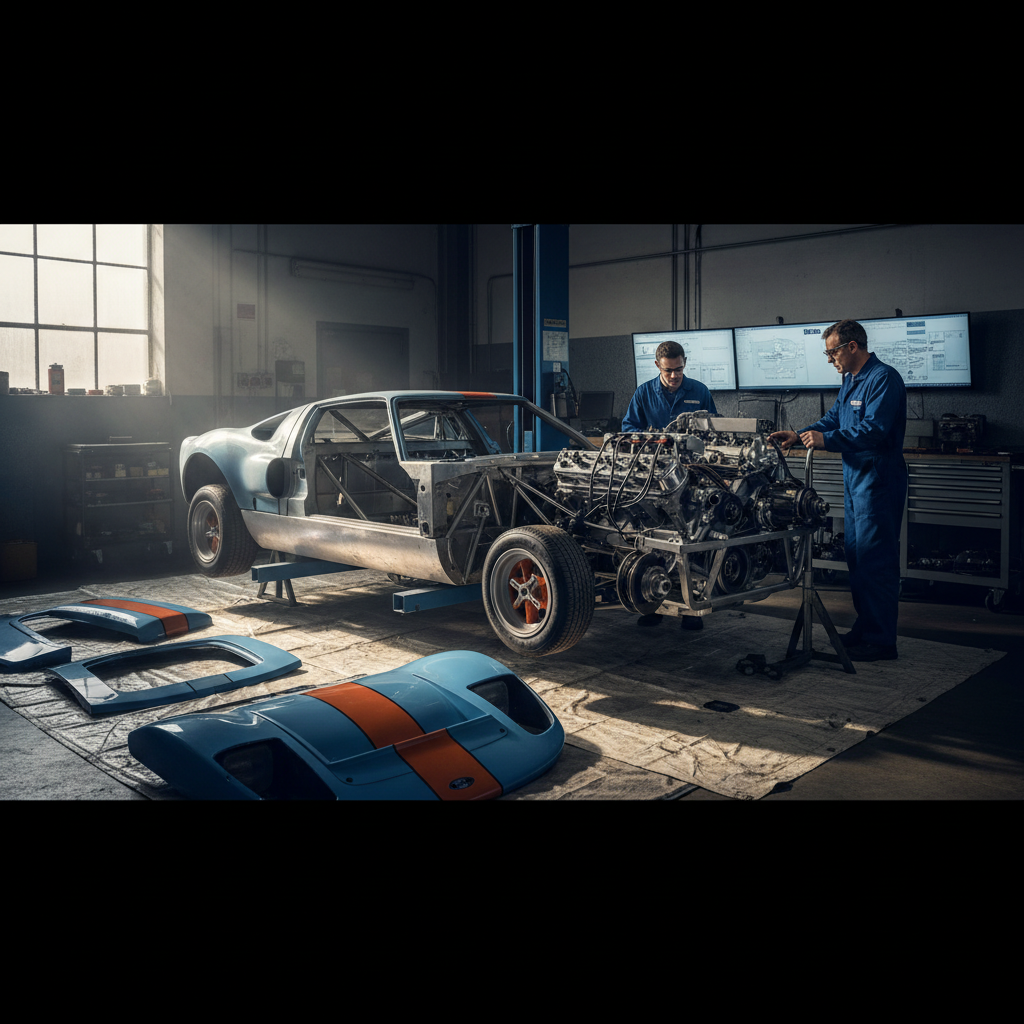
Chassis P1006 represents a pivotal moment in the GT40 story. Originally built by Ford Advanced Vehicles (FAV) in Slough, England, it was among the early Mk I cars designed to tackle the grueling demands of endurance racing. The GT40 project itself was an audacious undertaking, initiated after Ford’s failed attempt to purchase Ferrari in the early 1960s. Henry Ford II, fueled by this slight, famously directed his teams to build a car that would dethrone Ferrari at its most cherished event, Le Mans. The Mk I, with its distinctive low-slung profile and powerful mid-mounted engine, was the first iteration of this ambitious vision.
P1006 was specifically prepared for the 1965 24 Hours of Le Mans, wearing the racing number 15. The car, adorned in a vibrant green livery, joined a formidable Ford assault on the French circuit. While the 1965 race ultimately saw all the GT40s retire – P1006 itself succumbing to a failed head gasket after five hours – it laid crucial groundwork for the dominant victories that Ford would achieve in subsequent years. Privateer Ferraris, including a pair of 250 LMs and a 275 GTB, claimed the podium that year, underscoring the challenge Ford faced and the resolve it instilled. The lessons learned from cars like P1006 were invaluable, directly contributing to Ford's unprecedented four consecutive wins from 1966 to 1969.
A Life Beyond the Race Track
The life of P1006 didn't end with its early retirement from Le Mans. Following the race, the car transitioned into a vital role as a development vehicle for Ford Advanced Vehicles. It undertook extensive testing at Monza, Italy, in September 1965, accumulating thousands of miles as engineers worked to refine the GT40's performance and durability. During this period, the car experienced a brake caliper failure that led to a collision, though reports from the time, often stating extensive damage, have since been clarified as minimal by a more recent 2024 publication. Despite the seemingly minor damage, FAV ceased using P1006, and some of its suspension components and body panels were repurposed for another GT40, chassis P1000.
After Ford Advanced Vehicles closed, P1006 was sold to its first private owner. Over the decades, it passed through several hands in the United Kingdom, even being registered for road use by one owner in the 1970s. Its journey eventually led to multiple restorations. In 1978, a new owner commissioned a restoration to bring it back to its original 1965 Le Mans specifications. Further meticulous work was undertaken in 2003 by Shelby and GT40 specialists Auto Techno Sports, based in Le Mans, after the car was acquired by its current owner, a dedicated collector in the region since 1993. This commitment to historical accuracy ensured that P1006 once again embodied its iconic Le Mans form.
The Enduring Legacy of P1006
Today, this specific Ford GT40 Mk I stands as a magnificent piece of living automotive history. Its journey from a hopeful Le Mans contender to a crucial development tool and ultimately a meticulously restored artifact highlights the relentless evolution and passion within the classic car world. The recent showcasing of P1006 at the 24 Hours of Le Mans Museum further cemented its place among the legends, allowing a new generation to appreciate its significance.
For collectors and enthusiasts worldwide, the availability of such a historically rich vehicle is a rare event. While auction results for other GT40s have reached astonishing figures – including a 1966 Mk II Lightweight selling for $12.375 million this year and another '66 road car for $7.04 million last year – the true value of P1006 lies not just in its monetary worth, but in its unparalleled narrative. It is a tangible link to Ford’s audacious challenge against Ferrari, a witness to the birth of a legend, and an enduring symbol of what makes classic racing cars so endlessly captivating. Its design, born for speed and endurance, remains as striking today as it was on the grid at Le Mans in 1965.