Taming the Beast: A Modern Drive in Ferrari's Iconic 750 Monza
The hallowed grounds of Goodwood are once again set to echo with the roar of vintage engines, and a recent insight from motoring journalist Andrew Frankel has brought one particular legend into sharp focus: the Ferrari 750 Monza. Fresh from a driving experience, Frankel offers a vivid account of piloting this 1950s racing thoroughbred, revealing why it remains a uniquely challenging and utterly captivating machine for any driver privileged enough to get behind its wheel.
A Four-Cylinder Marvel in a V12 World
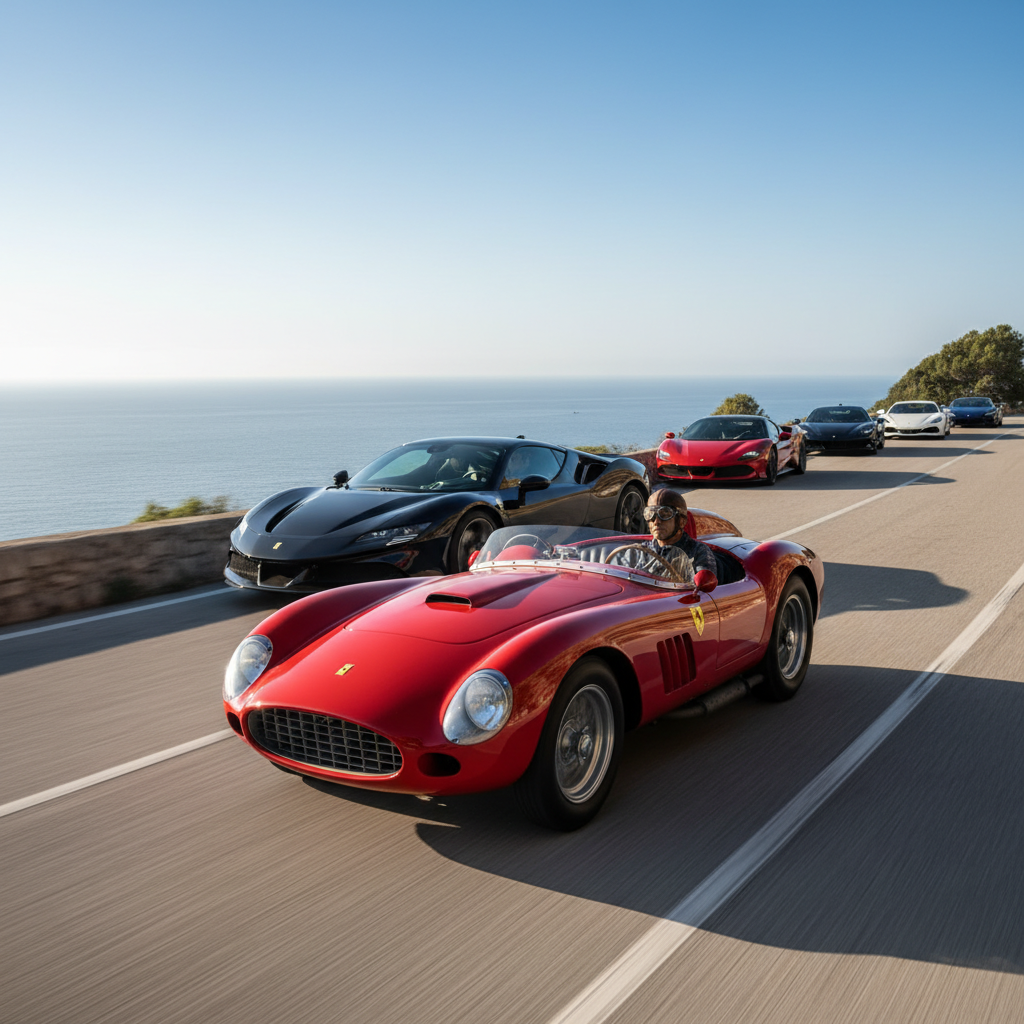
In an era where Ferrari often championed the multi-cylinder engine, the 750 Monza stood out as an intriguing anomaly. Born in the mid-1950s, this sports-racer was powered by a powerful 3.0-liter, four-cylinder engine, a configuration that might seem unusual for the marque. However, this engine, designed by Aurelio Lampredi, was known for its immense torque and reliability, making it a formidable competitor on circuits worldwide. The car's exquisite bodywork, hand-hammered into shape by Scaglietti, was a design by none other than Dino Ferrari himself, contributing to its status as one of the most achingly beautiful Ferraris of all time. Its creation was part of a dazzling roster of vehicles that would grace grids like Goodwood's Lavant Cup, a race exclusively for 1950s Maseratis and Ferraris, showcasing the pinnacle of automotive engineering and aesthetics from that golden decade.
The Unforgiving Dance: Driving the 750 Monza
Frankel’s experience underscores that the 750 Monza is no ordinary classic; it demands to be driven on its own terms. Unlike some contemporaries, such as the Aston Martin DB3S, which could accommodate various driving styles, the Monza commanded a specific approach. Its strengths lay in the raw torque of its four-cylinder engine and the exceptional traction provided by its De Dion rear axle and rear-mounted gearbox with a limited-slip differential. This combination meant the Monza would explode out of slow corners with immense force, almost like an artillery shell, yet its advantage could quickly diminish on the straights. Navigating faster corners in the Monza was described as a handful, presenting an incredible and wonderful challenge. The rare moments of truly mastering the car, of driving it 'quite well,' were among the most rewarding experiences in over three decades of racing old cars, according to Frankel. This visceral and demanding nature, far from being a flaw, is precisely what makes the 750 Monza such a compelling and characterful machine.
Legacy and Enduring Appeal
The Ferrari 750 Monza’s historical significance is undeniable. It was a successful racer, contributing to Ferrari's legendary status in sports car endurance racing. Its technical specifications, particularly the powerful four-cylinder engine in a brand famed for V12s, set it apart. While some might consider it underrated, its beauty and unique engineering continue to draw enthusiasts. The challenge it presented to its drivers, requiring skill, respect, and a willingness to meet its demands, ensured that every victory and every well-driven lap was hard-earned. For collectors and connoisseurs today, the 750 Monza represents a purity of purpose and a direct connection to a thrilling era of motorsport. It’s a testament to a time when cars were mechanical extensions of their drivers, and mastering them was a true art form. As the Goodwood Revival approaches, the anticipation of seeing such magnificent machines in action once again serves as a potent reminder of their enduring allure and the timeless excitement they generate.