Toyota AE86: Revisiting the Drifting Icon – Hype vs. Reality on Today's Roads
The Toyota Corolla AE86 occupies a hallowed place in automotive history, particularly within Japanese car culture and motorsport. Immortalized by the manga and anime series 'Initial D', the lightweight, rear-wheel-drive coupe became synonymous with nimble handling and underdog victories on mountain touge passes. Yet, decades after its prime, recent online discussions are prompting enthusiasts to re-evaluate the AE86's real-world driving experience today, questioning if the legend truly holds up against modern expectations and road conditions.
The Myth of the Touge King and Modern Highways

For many, the AE86 conjures images of precision drifts and high-revving exhilaration. However, contemporary drivers often find a significant gap between this romanticized vision and the car's actual performance on today's extensive, high-speed roadways. Enthusiasts note that the AE86, particularly in stock form, is 'severely underpowered' for American highways, where speeds often exceed 50 mph. Its playful chassis characteristics, celebrated on twisty circuits and narrow mountain roads, are largely 'underutilized on our high speed, straight and wide roadways'. This disparity has led some owners to part with their restored AE86s, reserving their modified versions solely for track use, as the car can be an 'unpleasant car to drive over 50mph particularly if you don't have corners to carve'.
Conversely, the AE86's charm truly shines in environments akin to its original proving grounds. In Japan, where non-expressway speeds rarely exceed 35-40 mph and roads are tight with numerous curvy routes due to geographical necessity, the car remains a joy to drive in stock or near-stock form. Similar conditions in Ireland also contribute to its enduring popularity. These environments allow drivers to fully exploit the car's balanced 50/50 weight distribution and rear-wheel-drive dynamics, which were the hallmarks of its design as a light, cheap, and modifiable platform capable of being optioned with a limited-slip differential for cornering prowess.
The Enduring Appeal: A Driver's Unfiltered Challenge
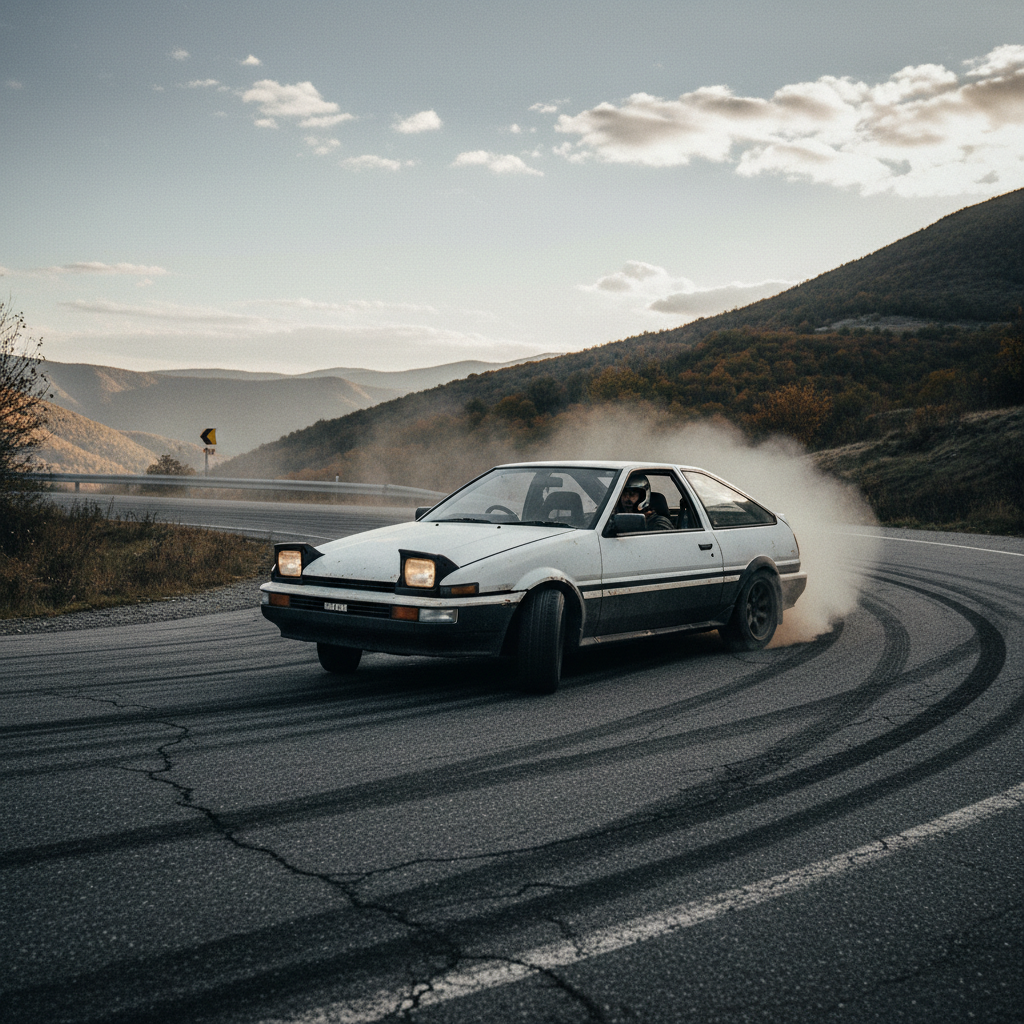
Despite its perceived shortcomings on open roads, the AE86 continues to captivate a dedicated following. Its true appeal, many argue, lies not in raw power but in the visceral and engaging driving experience it offers. It’s a car that demands driver involvement, requiring enthusiasts to 'ring its neck to get it to do what you want, drive with extreme momentum (even at 200hp), and give it exaggerated inputs'. This challenging nature, rather than being a deterrent, is precisely what makes it 'fun as hell' for those who appreciate the art of momentum driving and mastering a less forgiving machine.
The AE86's historical significance extends beyond its pop culture fame. It was a successful Group A rally car in its era, further solidifying its reputation as a capable and resilient performer. This heritage contributes to its allure, attracting those who value a tactile connection to the road and a driving experience unfiltered by modern electronic aids. The ability to personalize and modify the AE86 without 'ruining it' also resonates deeply with owners, allowing them to tailor the car to their preferences while preserving its essential character.
A Passionate Investment, Not a Performance Bargain
In today's classic car market, the AE86 commands prices that might seem disproportionate to its performance figures when compared to more modern, powerful vehicles. This leads to the observation that 'No classic car is 'worth the money from a price to performance ratio.' The current demographic of AE86 buyers often comprises 'older (50+) folks who owned them in the past' and are now returning to the hobby with the means to 'relieve their younger years'. These are not individuals solely seeking the fastest car for their buck, but rather those driven by nostalgia, a deep appreciation for the car's unique character, and the desire to reconnect with a significant piece of their automotive past.
For newcomers drawn in solely by 'hype and nostalgia', there's a strong possibility of 'severe disappointment'. The AE86 is not a point-and-shoot performance car; it's a nuanced instrument that rewards skill, patience, and an understanding of its limitations and strengths. Its value lies in its cult status, its role as a cornerstone of drifting culture, and the pure, unadulterated joy it provides to those willing to learn its language. It's a reminder that sometimes, the most special driving experiences come from cars that challenge, rather than merely flatter, their drivers.