Chinese Workshop Revolutionizes Classic Car Restoration with New Bodies
A groundbreaking development in the classic car world is set to redefine restoration and ownership, as a Chinese company, Juncheng Vehicle Co., has begun manufacturing entirely new body shells and chassis for several popular vintage models. This innovative approach offers a fresh solution to the perennial challenges of rust and parts scarcity, providing enthusiasts globally with unprecedented opportunities to revive cherished automotive legends. The news, recently highlighted in a Hagerty video featuring renowned car photographer Larry Chen, signals a significant shift in how classic vehicles can be preserved and enjoyed for generations to come.
Reviving Legends: The Juncheng Innovation
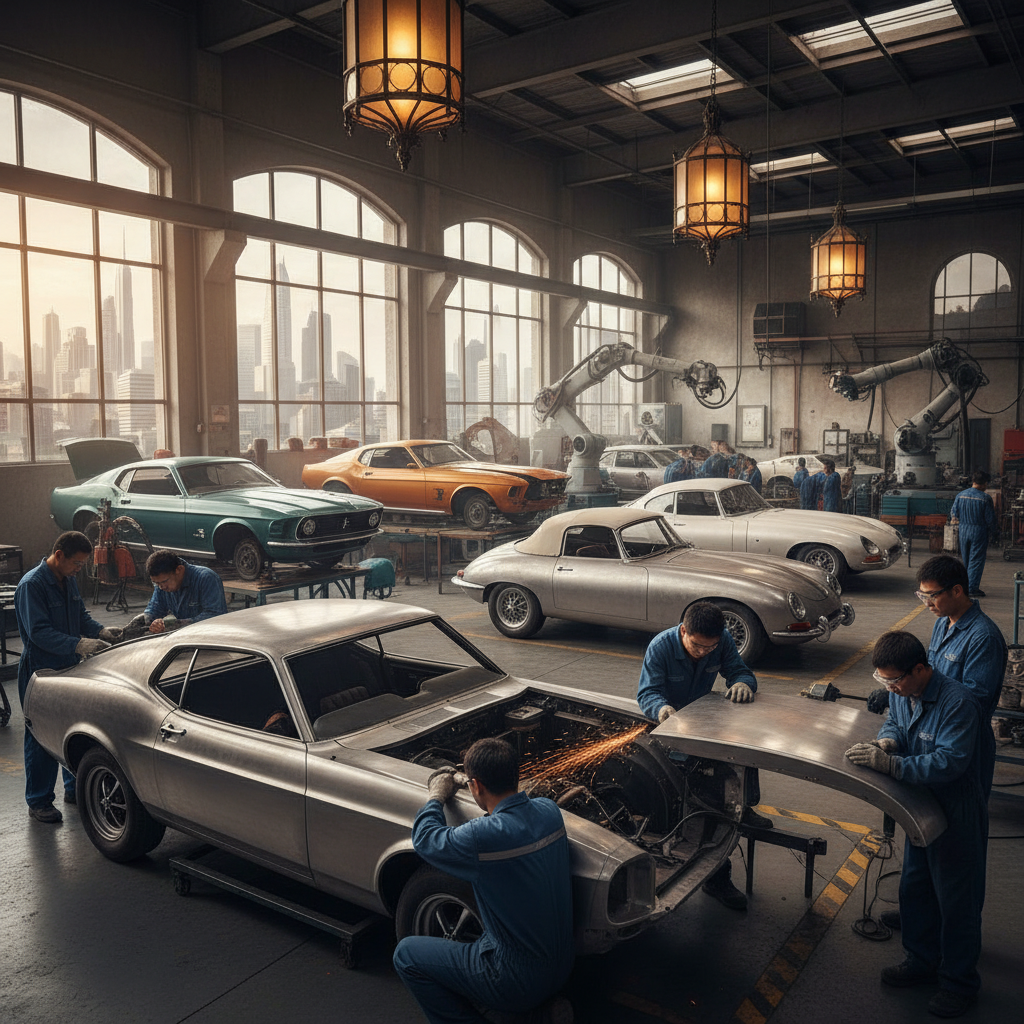
Located approximately three hours from Shanghai, Juncheng Vehicle Co. operates a remarkable and extensive facility where it produces complete body shells, chassis, and a wide array of replacement parts for beloved classic automobiles. Currently, the company offers new body and chassis units for iconic models such as the Datsun 240Z, the Toyota Corolla AE86, and the 1967 Ford Mustang. This initiative directly addresses a critical pain point for classic car owners worldwide: the pervasive issue of corrosion and the increasing difficulty in sourcing original, uncompromised body panels.
The pricing for these meticulously crafted components is notably competitive, making high-quality restoration more accessible. For instance, a new body and chassis for a Datsun 240Z or a Toyota Corolla AE86 is available for approximately $9,500 each, while a 1967 Mustang shell and chassis can be acquired for around $16,000. Juncheng Vehicle Co. prides itself on its in-house manufacturing capabilities, with about 95% of the work completed on-site. To ensure authenticity and precision for each new project, the company requires two original chassis for verification. This rigorous process aims to produce components that meet or even exceed the original factory specifications, thereby providing a robust foundation for a full restoration or a modern 'restomod' build.
The Purity Debate: Originality Versus Usability
The emergence of newly manufactured classic car bodies from Juncheng Vehicle Co. inevitably sparks a long-standing debate within the classic car community: the tension between preserving originality and enhancing usability. For many purists, the true value and historical significance of a classic car lie in its unadulterated state, with original components and minimal alterations. The introduction of brand-new, non-original body shells, even if crafted to exact specifications, can be seen by some as a deviation from this ethos, potentially affecting a vehicle's perceived 'collector value.'
However, an equally passionate segment of the enthusiast community embraces the concept of 'restomods' — classic cars that retain their vintage aesthetics but incorporate modern technology, performance upgrades, and improved reliability. For these owners, the ability to obtain a rust-free, structurally sound body for a Datsun 240Z or a Toyota AE86, models famously susceptible to corrosion, represents an invaluable opportunity. It means they can enjoy the analog driving experience of a classic without the constant maintenance headaches or the fear of catastrophic structural failure due to advanced rust. This trend aligns with a broader market shift where value is increasingly found in usability and cultural relevance, especially among younger collectors who may prioritize driving enjoyment over strict adherence to originality.
A New Era for Classic Car Accessibility and Sustainability
This development from Juncheng Vehicle Co. has far-reaching implications for the global classic car market. By providing a source for high-quality, affordable body and chassis replacements, it lowers the barrier to entry for aspiring restorers and makes previously 'basket case' vehicles viable projects once again. This could lead to a resurgence in the popularity of certain models, extending their lifespan and ensuring their presence on roads and at shows for decades to come.
Furthermore, this manufacturing capability contributes to the sustainability of the classic car hobby. Rather than endlessly searching for increasingly rare and expensive original parts, or resorting to extensive and costly rust repair, enthusiasts now have a direct pathway to revitalizing vehicles. It also caters to a global audience, as classic car passion knows no borders. The ability for owners across continents to access new foundational components from a single source streamlines the restoration process, fostering a more vibrant and accessible international classic car scene. This move by Juncheng Vehicle Co. exemplifies how innovation, even from unexpected corners of the world, can profoundly impact and invigorate the enduring allure of classic motoring.