Bentley's Blower Continuation Series: A Retrospective on Modern Heritage Restoration
In the rarefied world of classic automobiles, the concept of 'restoration' often conjures images of painstakingly returning a cherished relic to its former glory. Yet, occasionally, a project emerges that pushes the boundaries of this definition, marrying meticulous authenticity with cutting-edge craftsmanship to resurrect a legend for a new era. Such is the enduring legacy of Bentley Mulliner's Blower Continuation Series, a monumental undertaking that, having recently concluded its final deliveries, warrants a deep dive into its groundbreaking approach to automotive heritage.
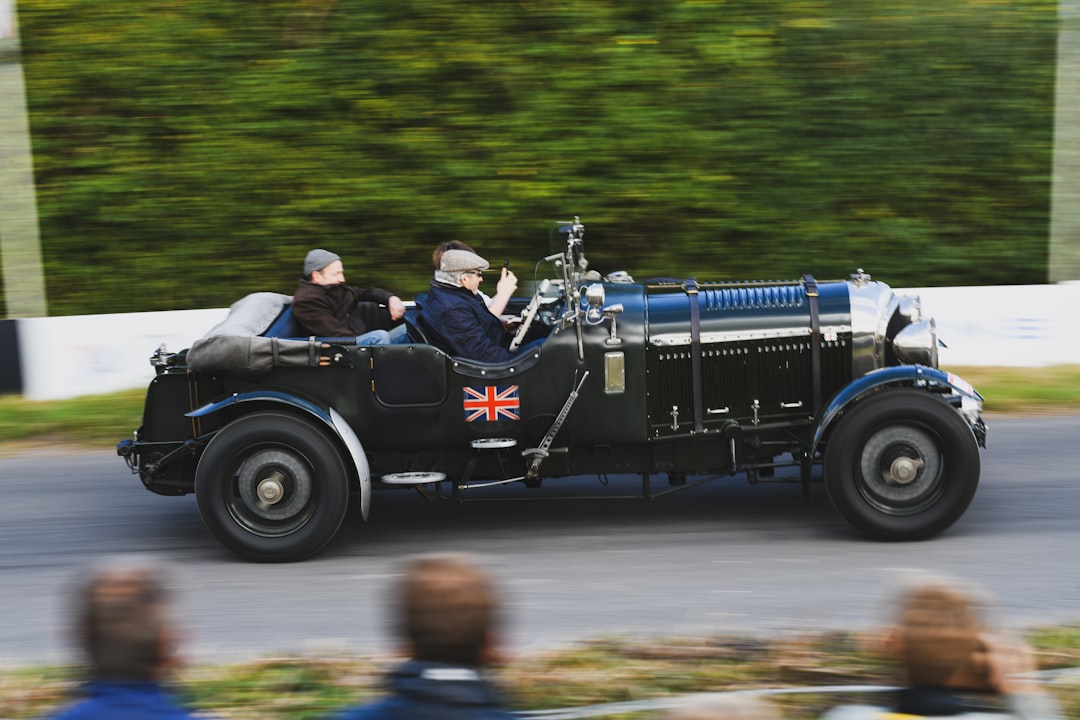
Launched as the world's first pre-war continuation series, the project saw the creation of 12 new, authentic recreations of Sir Tim Birkin's iconic supercharged 4½-litre ‘Blower’ Bentleys, with a prototype dubbed ‘Car Zero’ leading the charge. While not a restoration in the traditional sense of rebuilding an existing vehicle, the Blower Continuation Series adopted an exacting philosophy that echoes the most demanding restoration projects, aiming for absolute fidelity to the original 1929 specification. The undertaking itself was monumental, with over 40,000 hours dedicated to the design and construction of Car Zero alone.
The Blueprint of Authenticity: Laser Scanning a Legend
The foundation of this ambitious project lay in the comprehensive study of Bentley's own Team Car (Chassis HB 3403, registration UU 5872), a priceless 1929 'Blower' that served as the master model. Engineers and craftsmen at Bentley Mulliner embarked on a painstaking process of disassembling this historic vehicle piece by piece. Every single component was then meticulously laser-scanned, creating a complete digital CAD model of the Blower. This digital blueprint was crucial, allowing the team to reverse-engineer and precisely recreate nearly 2,000 individual parts.
The commitment to authenticity extended beyond digital data. The team delved into original design drawings and period photographs, ensuring that every curve, dimension, and detail was historically accurate. Many components were not simply manufactured anew but were hand-crafted using original 1920s tooling jigs and traditional techniques, some of which had to be re-learned by a new generation of artisans. This involved a network of highly skilled British specialists, from a 200-year-old firm hot-riveting heavy-gauge steel chassis frames to experts recreating bespoke radiators, leaf springs, and even the iconic headlamps to original specifications. The ash wood frame for the body, crafted by Lomax Coachbuilders, was then meticulously finished with period-correct Rexine material by Mulliner’s master craftsmen.
Rebuilding the Heart: The Supercharged 4½-Litre Engine
Central to the Blower's identity is its thunderous supercharged 4½-litre engine, a unit that embodies both W.O. Bentley's original design philosophy and Sir Tim Birkin's vision for forced induction. The Mulliner team embarked on recreating this complex powertrain, ensuring it mirrored the engines that powered Birkin's four original Team Blowers. This included the use of period-correct materials such as magnesium for the crankcase, alongside modern-for-the-era innovations like aluminium pistons, an overhead camshaft, four valves per cylinder, and twin spark ignition.
A newly machined Amherst Villiers roots-type supercharger, an exact replica of the original Mk IV, was paired with the engine, allowing it to develop an authentic 240 bhp. Given the significant differences in size and shape compared to modern Bentley engines, original Merlin testbed fixtures from Bentley's own storage were adapted to accommodate these special engines for extensive run-in and power testing. Each engine underwent a rigorous 20-hour cycle, gradually increasing speed and load to ensure its functionality and robustness.
The Road Ahead: Testing and Legacy
After its completion in 2020, Car Zero, finished in gloss black with an Oxblood red leather interior, embarked on an arduous testing regime. This dedicated test and development prototype was subjected to over 10,000 kilometres of rigorous driving, including a six-hour endurance test at Goodwood Circuit. Its ultimate validation came in 2023 when it competed in the Le Mans Classic, marking the first works-entered Bentley at Le Mans since 2003 and proving the performance, authenticity, and durability of the Continuation Series.
The successful completion and delivery of all 12 customer cars by December 2023 marked the culmination of a project that not only breathed new life into an automotive icon but also revived invaluable traditional skills within Bentley. For enthusiasts and collectors, these Continuation Series Blowers offer an unparalleled opportunity to experience a piece of pre-war racing history, crafted with an obsessive dedication to detail that sets a new benchmark for heritage restoration and recreation in the 21st century. The project stands as a testament to the enduring allure of classic motoring and the timeless art of automotive craftsmanship.