Students & AACA Team Up to Revive 1915 Ford Model T in Pompano Beach
In a heartwarming demonstration of intergenerational passion for automotive history, local students in Pompano Beach have collaborated with seasoned enthusiasts from the Fort Lauderdale Region of the Antique Automobile Club of America (AACA) to meticulously restore a 1915 Ford Model T. The project, aimed at preserving the legacy of classic cars and inspiring the next generation of gearheads, recently culminated in the unveiling of the revived classic at the historic Sample-McDougald House.
The initiative was spearheaded by Dirk DeJong, president of both the local AACA chapter and the Sample-McDougald House, who recognized the critical need to involve younger individuals to ensure the continued vitality of the collector car hobby. Targeting groups like the Boy Scouts, the club offered a unique, hands-on learning experience that goes far beyond textbooks. Chris Chambers, vice president of the AACA chapter and a collector with 17 antique cars, played a pivotal role in guiding the students through the intricate restoration process, imparting both mechanical skills and a deep appreciation for automotive heritage.
A Journey Back to Automotive Origins
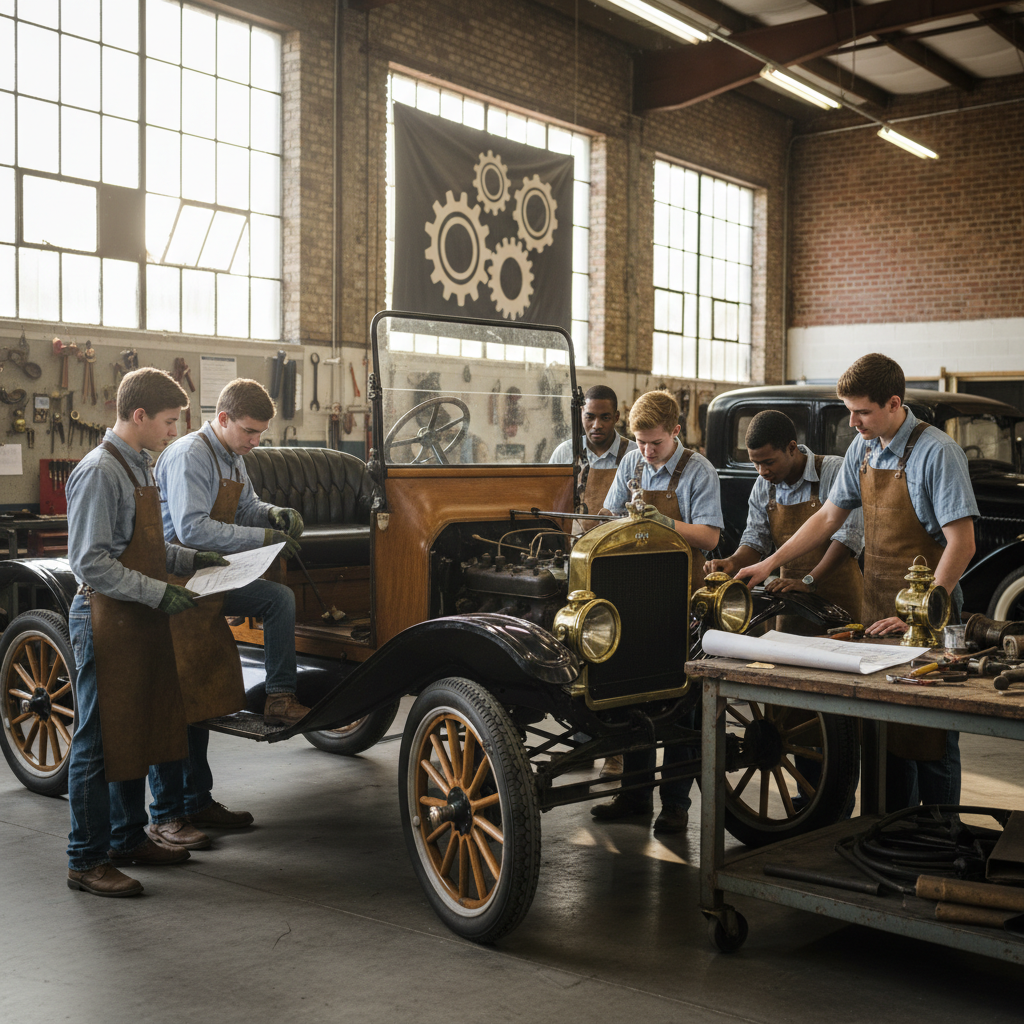
Restoring a vehicle as foundational as the 1915 Ford Model T is a profound undertaking, offering a direct connection to the very origins of mass-produced motoring. Unlike modern cars with their complex electronics and myriad components, the Model T, as noted by students involved, is a remarkably simple machine. This simplicity, however, presents its own set of challenges, particularly in sourcing period-correct parts or fabricating faithful reproductions. The restoration journey for this particular Model T began with its discovery tucked away in a corner, donated to the club for this educational purpose.
The initial stages of such a restoration involve careful disassembly and thorough assessment. Students like Nicholas D'Alberto and Nico Humes got their hands dirty from the start, helping to dismantle parts for deep cleaning. This included stripping out the seats, a process that revealed decades of accumulated dust, offering a tangible link to the car's long slumber. This hands-on engagement is crucial; as one student, Kamphuis, highlighted, it's an "incredible experience" and a "fantastic opportunity for young car enthusiasts to learn by helping rebuild one of the most important vehicles in automotive history."
The Craft of Revival: Beyond the Engine
While the article specifically mentions dismantling for cleaning, a complete restoration of a vehicle like the 1915 Model T typically encompasses every facet of its construction. Bodywork, though less complex than later models, still requires skilled attention to metal panels, addressing rust and dents that accumulate over a century. The Model T's robust chassis would have undergone rigorous inspection, with any structural weaknesses addressed to ensure its integrity for future use. The mechanical heart of the Model T, its simple but revolutionary engine, would have been meticulously rebuilt, replacing worn components to bring it back to its original running condition.
Interior restoration, while minimalist for a Model T, still involves careful attention to seating materials and basic controls. For a vehicle of this era, authenticity in materials and finishes is paramount, requiring research into original specifications. Paint, too, would be applied to match factory colors and finishes, often a multi-stage process of stripping, priming, and careful application to achieve a durable and historically accurate appearance. The project underscores that restoration is not merely about making a car look good, but about preserving its history and ensuring that its story, and the engineering marvel it represents, continues to be appreciated by future generations.
The success of the Model T project serves as a powerful testament to the AACA's commitment to nurturing the next generation of classic car enthusiasts. By providing practical experience and mentorship, they are actively working to sustain a hobby that relies heavily on skilled craftsmanship and historical knowledge. The sight of the gleaming white Cadillac that once again graces the streets, or the transformed Pontiac Firebird Trans Am named "Phoenix Firebird," illustrates the profound dedication required for these projects. This collaborative restoration of the 1915 Model T stands as a shining example of how community engagement can breathe new life into automotive legends, ensuring their captivating stories live on.